The story behind HeraVita
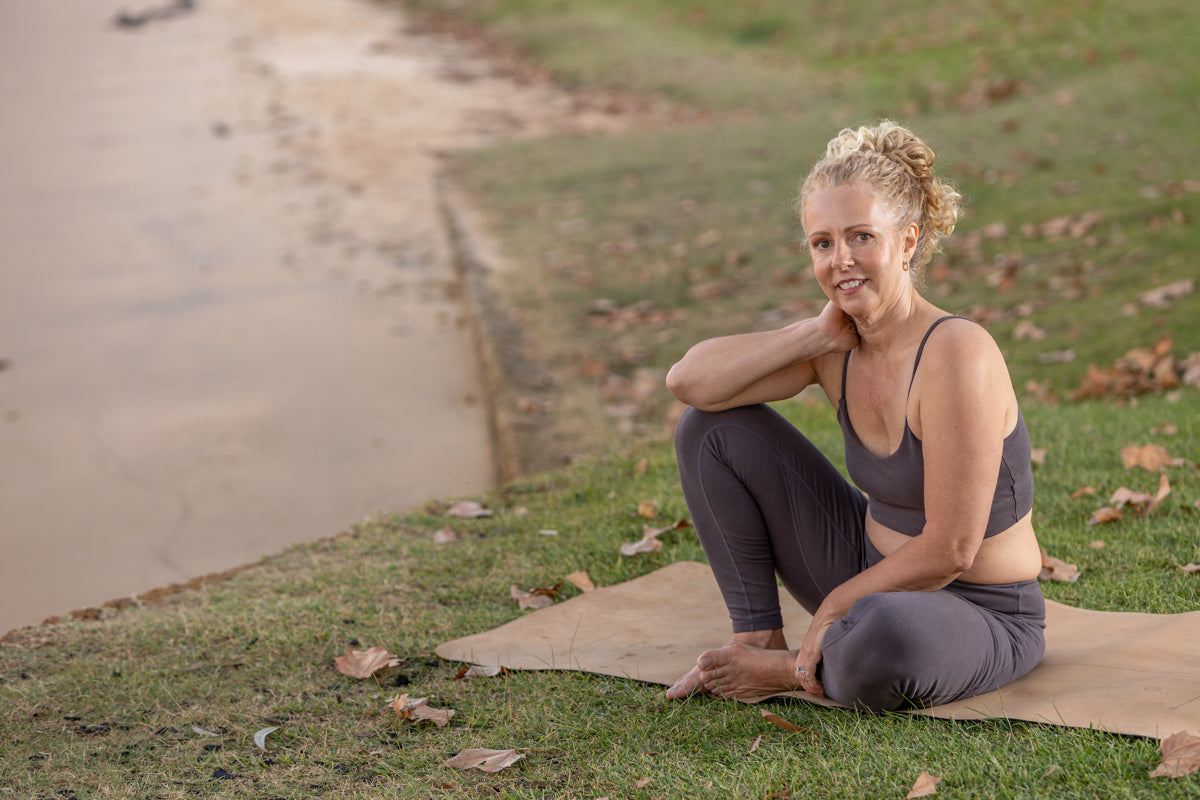
Every experience, every stumble, every moment of being dismissed or overlooked has led me to exactly this. I am exactly where I need to be — and I want to tell you why.
It started with my son.
My first venture, Bubbaroo, was built from a postpartum experience that showed me how profoundly mothers are underserved. That lesson — build it yourself when what you need doesn’t exist — has shaped every decision I’ve made since.
It taught me to listen to lived experience. To trust women when they say something doesn’t work. To understand that the gap between what’s available and what’s actually needed is not a small gap. It’s a chasm.
Diagnosed. Then left with nothing.
When I was 36, gym scales told me my bone mass was below average. I asked my doctor for a DEXA scan. In Australia, DEXA scans aren’t Medicare rebatable until you turn 70, by which point the window for meaningful intervention has already closed for most women. I pushed for the scan anyway.
I was diagnosed with osteopenia. My mother has osteoporosis, diagnosed in her early forties. Both of my grandmothers had it. My maternal grandmother broke both hips in her sixties and lived to 97, but the last ten years of her life were not the life she deserved to have.
I was diagnosed - and then nothing. No care plan. No guidance. No next steps. Just a result on a page and a door closing behind me.
Then the perimenopause symptoms hit. I was told what so many women of my generation were told: that I should only consider HRT if my symptoms were truly unbearable, because of a 2002 study that linked it to breast cancer risk. What I wasn’t told was that the study had serious flaws. It used outdated synthetic hormones, its findings had been widely misapplied, and women all over the world had been paying the price for that misinformation for over twenty years!
For three years I suffered through symptoms that had a safe, evidence-based solution available to me. Three years.
It was only when I found a women’s health GP, who knew the current evidence, who took my history seriously and treated me like an adult capable of making informed decisions about my own body, that everything changed. She gave me my quality of life back.
Too long, women have been overlooked. That ends here.
Parkinson’s at 58. A different kind of clarity.
My father was diagnosed with Parkinson’s Disease at 58. Watching him navigate that has made me deeply serious about removing toxins from my life wherever I can, from what I eat, what I use, and what I wear.
Most people don’t realise that conventional synthetic activewear is one of the largest contributors to microplastic pollution on the planet. Every wash releases thousands of plastic microfibres into our waterways. But it goes further than that. Many synthetic performance fabrics contain PFAS (per- and polyfluoroalkyl substances), known as forever chemicals, used to create water resistance, stretch, and moisture-wicking properties. They are called forever chemicals because they don’t break down. In the environment. In the soil. In our bodies.
It goes beyond synthetics. Paraquat, a herbicide strongly linked to Parkinson’s Disease and banned in 67 countries including China, is still legally used in conventional cotton farming in both Australia and the United States. It doesn’t break down in soil. It contaminates waterways. And the people most directly harmed are the farmers and agricultural workers who apply it, many of whom develop Parkinson’s Disease at significantly higher rates than the general population.
When I learned that, given my father’s diagnosis, I couldn’t simply look away. Choosing conventional cotton felt like participating in something I wasn’t willing to be part of. Every purchasing decision in the supply chain is a vote for the farming practices behind it.
What you wear against your skin every single day is not a neutral choice. It never was.
This is why HeraVita uses GOTS certified organic cotton. GOTS, the Global Organic Textile Standard, is the world’s leading certification for organic fibres. It covers not just how the cotton is grown but how it is processed, dyed and manufactured — no toxic pesticides, no Paraquat, no harmful chemical finishes at any stage of the supply chain. We also use wool, silk and other natural fibres.
I want to be honest with you: HeraVita will be made from predominantly natural fibres but not exclusively. Performance activewear has real functional demands and we are not willing to sacrifice the fit, support and durability that women need just to make a purity claim. Where a small amount of synthetic fibre is needed for performance, we will use it - intentionally, minimally, and transparently.
What we will never compromise on is this: no unnecessary chemicals, no PFAS treatments, no forever chemicals, no endocrine disruptors. The majority of what touches your skin will be natural. And everything we choose will be chosen with your health and the planet’s in mind.
This is my life’s work.
Everything I have described, my osteopenia, my mother’s and my grandmothers’ osteoporosis, my father’s diagnosis, three years of unnecessary suffering, a healthcare system that repeatedly asked me to wait, all of it pointed to the same gap. Women’s bodies, and the lives inside them, are underserved. Simply the result of women never being the priority.
HeraVita is my answer to that. Activewear built on real research, made from materials I would stake my own health on, designed for the bodies women actually live in across postpartum, perimenopause, menopause and beyond. Not adapted from a young women’s pattern. Not scaled up from a sample size. Built from the ground up, for us.
I am exactly where I need to be. And I would love for you to be part of what comes next.
This is not just activewear. It is sustainable strength — for your body and for the planet.
Nicole
Founder, HeraVita
Leave a comment
Add a comment